
 Add to Preferred Sources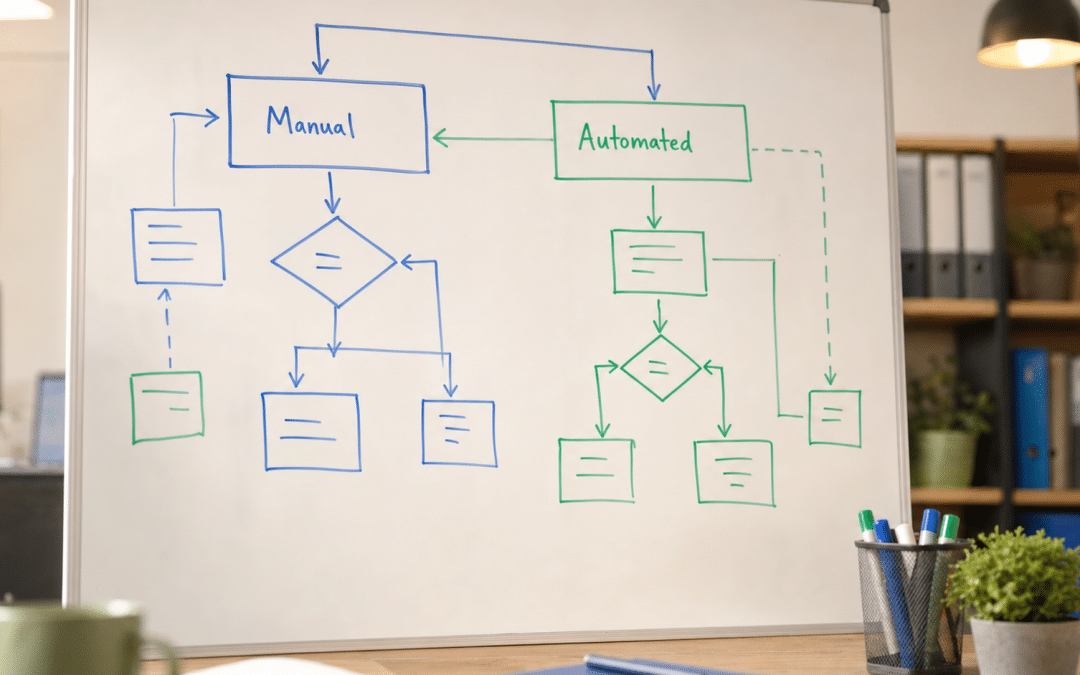
Google ads bidding strategies are the rules that tell Google how much to bid at every individual auction — and whether a human or Google's AI controls that decision. Choosing the wrong one at your current account stage is one of the fastest ways to burn through budget before your campaign generates anything useful. For the full picture on paid search in South Africa, start with the Google Ads South Africa guide — this post goes one level deeper into the decision most SA accounts get wrong at least once.
Following the retirement of Enhanced CPC in March 2025, and after Google's June 2026 relabeling that restored Target CPA and Target ROAS as standalone options, there are now seven core bidding strategies for Search campaigns. Five of them are Smart Bidding options driven by Google AI. Two are not. The right strategy for your campaign changes as your account accumulates data — and in South Africa, where many campaigns start at lower monthly spends than global benchmarks assume, knowing exactly when to make that switch saves real money.
Quick Answer
There are currently seven active Google ads bidding strategies for Search campaigns in 2026. Smart Bidding options — Maximize Conversions, Maximize Conversion Value, Target CPA, and Target ROAS — work best once an account has sufficient conversion history (30+ conversions per month for Target CPA; 50+ with revenue values for Target ROAS). Target Impression Share is for visibility-first goals. Maximize Clicks suits the traffic-building stage. Manual CPC is the right choice when conversion tracking is not yet in place or when monthly spend is too low to feed the algorithm. The correct strategy changes as your account matures.
Jump to a Section
Not sure which approach your SA account should be on?
Send us your campaign structure and we will tell you whether your current bid strategy matches your account's data level — no obligation, back to you within 24 hours.
Get a Free Bidding ReviewWhat Are Google Ads Bidding Strategies?
Google ads bidding strategies are the mechanisms that determine your maximum bid at each Search auction. They divide cleanly into two categories: manual strategies, where the account manager sets and holds every bid, and automated strategies, where Google's AI adjusts bids in real time based on the probability of a desired outcome (a click, a conversion, or a target position).
In June 2026, Google relabeled Target CPA and Target ROAS as standalone strategy names again — they had previously appeared as "Maximize conversions with a Target CPA" and "Maximize conversion value with a Target ROAS." The labeling changed; the bidding behaviour did not. The seven strategies available for Search campaigns, from full manual control through to Google Ads smart bidding, are:
| Strategy | Who controls the bid | Primary goal | Data requirement |
|---|---|---|---|
| Manual CPC | You | Cost-per-click control | None |
| Maximize Clicks | Google AI | Traffic volume | None |
| Target Impression Share | Google AI | Ad position / visibility | None |
| Maximize Conversions | Google AI | Conversion volume (uncapped) | Low — builds toward threshold |
| Maximize Conversion Value | Google AI | Total revenue value (uncapped) | Low — but needs revenue-level tracking |
| Target CPA | Google AI | Conversions at target cost | 30+ conversions/month recommended |
| Target ROAS | Google AI | Revenue at target return | 50+ conversions/month with value data |
Target Impression Share sits apart from the others: its goal is ad visibility — showing at the absolute top of the page, top of the page, or anywhere on the page — rather than clicks or conversions. It suits brand-protection and branded-keyword campaigns, not performance campaigns measured by leads or sales. Maximize Conversion Value is the revenue-focused counterpart to Maximize Conversions: it optimises for total revenue rather than conversion count, which makes it relevant for ecommerce accounts before they have enough data to set a Target ROAS.
What Happens Inside a Search Auction at Bid Time
Smart Bidding uses Google's AI to set a different bid for each individual auction based on the probability that the searcher will convert. Rather than applying a fixed maximum bid per keyword — the Manual CPC approach — it adjusts every bid in real time using a combination of contextual signals.
According to Google's Smart Bidding documentation, the signals evaluated at each auction include device type, user location, time of day, browser, operating system, interface language, and audience segment membership. A search from a Sandton office desktop at 10am on a Tuesday may carry different conversion-probability signals than the same keyword searched from a mobile device in Kimberley at 10pm Saturday. Manual CPC bids the same for both. Smart Bidding bids differently for each.
The prerequisite for this to work is conversion data. Without it, the algorithm has no signal to calibrate against. This is why proper Google Ads conversion tracking is not optional infrastructure — it is what makes Smart Bidding function. Launching any Smart Bidding strategy on an account without reliable conversion tracking produces one outcome: the algorithm learns nothing while spending the budget.
Key Takeaway
Smart Bidding reads up to dozens of contextual signals at each auction to set a bid specific to that moment. Manual CPC applies one bid to every auction for that keyword regardless of context. The advantage of Smart Bidding is real — but only once the account has enough conversion events to train on.
Which Approach Fits Your Account Stage?
The correct bid approach is not a permanent setting. It changes as your account accumulates data, and most SA accounts move through at least three stages before reaching the setup that maximises efficiency. The table below maps the four most common stages:
| Account stage | Monthly conversions | Recommended approach | Target to set? |
|---|---|---|---|
| No conversion tracking in place | 0 | Manual CPC | N/A — fix tracking first |
| Traffic building / early data | 0–20 | Maximize Clicks or Maximize Conversions (no target) | No — let the algorithm gather data freely |
| Lead-gen with stable history | 30+ | Target CPA | Yes — set at your recent average cost per conversion with a margin for the learning window |
| Ecommerce with revenue tracking | 50+ with revenue values | Target ROAS | Yes — start below your recent ROAS to give the algorithm room to calibrate |
How Much Conversion Data Does Your Account Actually Need?
Google recommends at least 30 conversions in the last 30 days before setting a Target CPA, and at least 50 conversions per month with revenue values before setting a Target ROAS. These thresholds are the same globally — but what changes for South African advertisers is how much monthly spend those conversion counts require.
SA Search campaigns typically land between R5 and R50 per click, with R10–R15 a sensible mid-range planning figure for competitive but non-premium sectors (source: Launch Digital SA 2026 cost guide). At R12.50 per click — the midpoint of that range — reaching the tCPA threshold depends almost entirely on your landing page conversion rate. Using that figure as a working input:
| Scenario (CR = conversions ÷ clicks) | Clicks for 30 conversions | Monthly spend at R12.50/click | Smart Bidding ready? |
|---|---|---|---|
| High-intent search / strong landing page (1 in 10 converts) | 300 clicks | R3,750/month | Target CPA viable |
| Typical mid-range campaign (1 in 20 converts) | 600 clicks | R7,500/month | Target CPA viable |
| Competitive keyword or broad match (1 in 50 converts) | 1,500 clicks | R18,750/month | Maximize Conversions until threshold reached |
These are planning inputs, not performance predictions — conversion rate varies significantly by industry, keyword intent, ad quality, and landing page. The right Google Ads budget for your SA campaign depends on where you sit in this table. The structural point holds: a campaign with a strong conversion rate can accumulate smart bidding data faster at lower monthly spend than one with a weak conversion rate running at much higher spend. Your landing page quality is a direct multiplier on your data accumulation speed.
For tROAS specifically, 50 conversions per month at a 5% conversion rate requires approximately 1,000 clicks per month — at R12.50/click, that is R12,500/month in ad spend before adding the targeting premium for higher-value keywords. High-competition sectors (legal, insurance, finance) with CPCs above R50 push this spend requirement considerably higher. Those sectors are also ones where deals are high value, so proper cost-per-lead benchmarking in SA should inform whether the data investment is justified.
Is your conversion tracking set up to feed smart bidding correctly?
Share your current campaign data and we will review whether your tracking setup and conversion volume support the bid approach you are on — or tell you which stage you are actually at.
Send Us Your Campaign DataTarget CPA Versus Target ROAS for South African Campaigns
Target CPA and Target ROAS solve the same problem from different angles: how to tell Google what a profitable outcome looks like so the algorithm can optimise toward it.
A target CPA bidding strategy is the right choice when all your conversions have roughly equal value — enquiries, phone calls, demo requests, consultation bookings. For most South African service businesses (attorneys, medical practices, financial advisors, trades), the conversion event is a lead, and all leads are worth approximately the same to the business. You set a target cost-per-lead that reflects your acceptable acquisition cost; Google optimises bids to hit that average over time.
Target ROAS is the right choice when conversion values differ. An online retailer whose basket values span two orders of magnitude cannot treat all conversions equally — a high-value order deserves a higher bid than the cheapest item in the catalogue. Target ROAS requires revenue values attached to each conversion event in your tracking setup. Without that, the algorithm has no value signal to optimise against and will default to treating all conversions as equal — which is what you would have got from Target CPA anyway.
High-value SA service businesses — commercial law firms, bespoke financial advisors, enterprise software vendors — can also benefit from Target ROAS, but only if the deal value is being fed back into Google Ads via offline conversion import or a CRM integration. Counting a lead as the conversion without its eventual revenue value means the algorithm is optimising lead volume, not revenue quality.
Key Takeaway: The tCPA vs tROAS decision
Use Target CPA when your conversions have roughly equal value (service leads, bookings, sign-ups). Use Target ROAS when conversion values vary significantly and you have revenue-level tracking in place. The distinction is not about industry — it is about whether your conversion tracking carries value data.
When Manual CPC Is the Right Choice in South Africa
Manual CPC gives the account manager full control over the maximum bid at keyword or ad group level, with no automated adjustment at auction time. It is not a fallback for beginners — it is the appropriate tool in specific, well-defined situations.
1. No conversion tracking in place. Smart Bidding cannot function without conversion events to learn from. Running any automated approach on an account without reliable conversion tracking means Google is optimising for nothing measurable. Fix the tracking first; the bid approach is secondary.
2. Monthly spend below the conversion threshold. On the planning figures above, an account converting at roughly 1-in-10 needs about R3,750 a month to reach Google's 30-conversion Target CPA threshold. Below that, the account may never accumulate enough data within the learning window for algorithms to calibrate. Manual CPC keeps cost predictable while the account builds history. This is not a permanent state — it is a starting position.
3. Highly niche or low-volume keywords. Some SA industrial, professional services, or B2B keywords have monthly search volumes so low that even a well-funded campaign cannot generate enough auctions for Smart Bidding to learn patterns. In these cases, careful manual management — informed by Quality Score fundamentals — keeps cost predictable while an algorithm lacks the sample size to calibrate.
4. Budget is the binding constraint. When a campaign's budget is consistently capping delivery, Smart Bidding on a tight budget can push bids high on expensive clicks and exhaust the daily cap in the first few hours. Manual CPC with bid caps prevents over-bidding on isolated high-cost keywords while keeping the account live throughout the day. (Note: Google's August 2026 update improved this — budget-limited campaigns running Target CPA or Target ROAS now optimise more closely to their stated targets rather than overperforming them. But for very small budgets the structural issue remains.)
Key Takeaway: Manual CPC is a tool, not a concession
Manual CPC is the right choice when smart bidding's data requirements cannot be met, when keyword-level control has clear value, or when the budget is too small to sustain a learning phase. The mistake is staying on Manual CPC in a data-rich account out of habit. On accounts with sufficient conversion history, Google Ads automated bidding adjusts bids at every auction in ways a static manual bid cannot — the transition is a milestone to plan for, not something to avoid. Avoid the common pitfalls covered in the Google Ads mistakes guide for SA.
Why South African Businesses Choose Growth Pulse Media
Bidding strategy decisions are not one-time settings — they need revisiting as account data grows, market conditions shift, and campaign objectives evolve. At Growth Pulse Media, Dirk van Greuning manages Google Ads campaigns for South African businesses from an operator's standpoint: accounts are built from the ground up with conversion tracking that actually feeds smart bidding, and bid strategy transitions are made when the data supports them, not because a strategy sounds more advanced.
Work is executed in-house with a limited client load — no juniors handling bid adjustments on accounts they do not understand. Every campaign gets senior attention throughout its lifecycle, including the data-building phase that most operators find frustrating but that determines whether smart bidding ever works as intended.
If your current campaign is on a bid strategy that does not match your account's data level — or if you are not sure — a free audit via the contact page gives you a clear read on the gap.
Who This Is Not For
Ready to audit your current bid approach?
Tell us which strategy your account is on and your current monthly spend. We will assess whether it matches your account stage and what the right next step looks like — no obligation.
Book a Free Strategy AssessmentFrequently Asked Questions
What are the current Google Ads bidding strategies for Search campaigns?
As of 2026, there are seven bidding strategies for Search campaigns: Manual CPC, Maximize Clicks, Target Impression Share, Maximize Conversions, Maximize Conversion Value, Target CPA, and Target ROAS. Enhanced CPC (eCPC) was retired in March 2025. In June 2026, Google restored Target CPA and Target ROAS as standalone strategy names — they had previously appeared as "Maximize conversions with a Target CPA" and "Maximize conversion value with a Target ROAS" — the underlying mechanics were unchanged; only the labeling was updated.
How many conversions do I need before using Target CPA?
Google recommends a minimum of 30 conversions in the last 30 days before setting a Target CPA. Below that threshold, the algorithm has insufficient data to calibrate cost targets reliably, which typically produces a prolonged learning phase and volatile results. In South African Search campaigns, reaching this threshold depends heavily on your landing page conversion rate and monthly ad spend — the lower the conversion rate, the more clicks — and therefore more spend — are required to accumulate 30 events. The calculation in this post shows the exact relationship.
What is the difference between Target CPA and Maximize Conversions?
Maximize Conversions tells Google to spend the full budget getting as many conversions as possible, with no cost-per-conversion constraint. Target CPA adds a cost ceiling: Google optimises for conversions while keeping the average cost per conversion near your stated target. Use Maximize Conversions while building toward the 30-conversion threshold; switch to Target CPA once the account has a reliable baseline and you have an acquisition cost target to hold.
What happened to Enhanced CPC (eCPC) and should I still use it?
Enhanced CPC was permanently retired for Search and Display campaigns in March 2025. Accounts still running eCPC at that point were automatically migrated to Manual CPC. eCPC is no longer available as an option for new or existing Search campaigns. If you are choosing between manual control and automation, the options are now Manual CPC (full manual control) or one of the four Smart Bidding strategies.
When should a South African account stay on Manual CPC instead of smart bidding?
Manual CPC is the right choice when conversion tracking is not in place, when monthly spend is too low to accumulate 30 conversions in a reasonable timeframe, when search volume on target keywords is too low for the algorithm to build reliable patterns, or when budget constraints are so tight that smart bidding's learning behaviour would exhaust the daily cap before market hours end. Once conversion history is sufficient, smart bidding typically takes over on cost efficiency.
Get Your Google Ads Bid Strategy Right for the South African Market
Growth Pulse Media reviews your current campaign setup, conversion tracking configuration, and account data level to tell you exactly which bid strategy fits your account right now — and what the transition path looks like as your data grows. All work is done in-house in Johannesburg. No obligation — we will get back to you within 24 hours.
Request a Free Google Ads Audit