
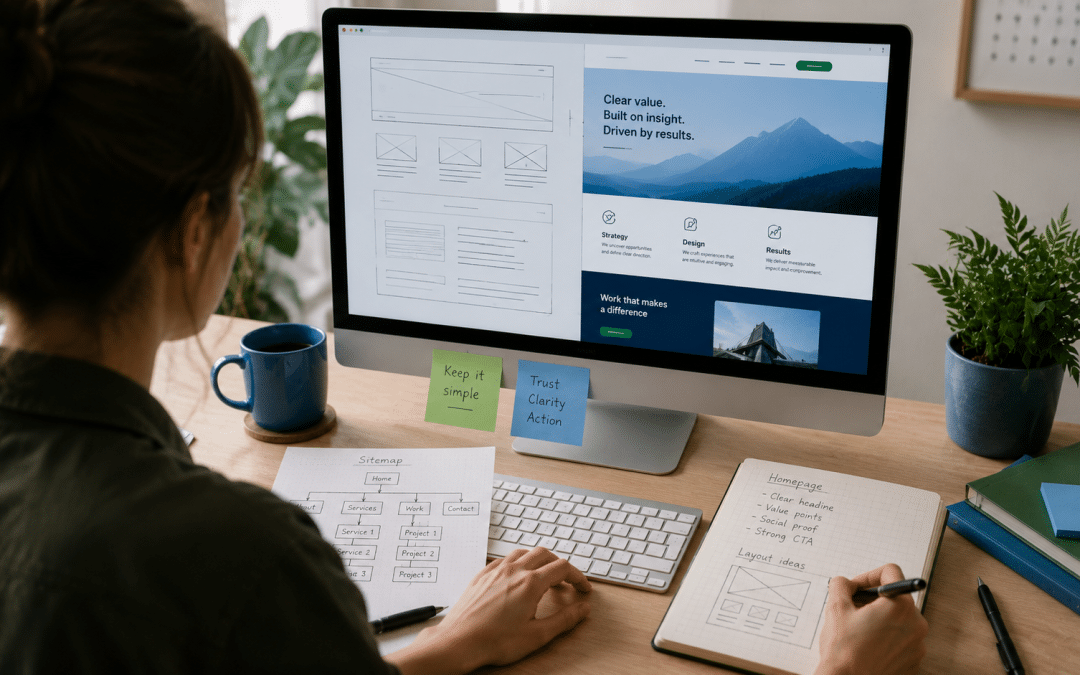
The web design process south africa businesses should expect runs in clear stages — discovery, planning, design, build, testing, launch, and support — not as a mysterious black box you hand money into and hope. Knowing the steps is how you stay in control of timelines, budget, and the final result. For the wider build context, see our web design guide; this page walks through exactly how a professional project runs, stage by stage.
A clear process is the difference between a smooth project and a painful one. When both sides know what happens at each stage, what is needed, and when, there are no nasty surprises — no scope creep, no endless revisions, no "where is my site?" silence. Transparency about the steps is, in our experience, the single best predictor of a happy outcome.
Quick Answer
A professional web design project runs in stages: discovery and brief, planning and sitemap, wireframes, visual design, content, build and development, testing and QA, launch, and post-launch support. Each stage has clear deliverables and things the client needs to provide. Knowing the steps keeps you in control of timeline and budget, and a transparent process — not a black box — is the best predictor of a smooth result.
Want to know exactly how your project would run? Let us walk you through it.
Get a Free Project WalkthroughWhat the Process Is and Why It Matters
A web design project is a staged journey from a blank brief to a live, working site, with each stage building on the last. It is not one person quietly making a site and revealing it at the end; it is a structured sequence of discovery, planning, design, build, and testing, with checkpoints where you review and approve before the next stage begins.
This structure is not arbitrary. Professional design follows a deliberate, iterative method — the design-thinking approach taught by the Interaction Design Foundation moves through understanding users, defining the problem, designing, prototyping, and testing, looping back as it learns. A web project applies the same discipline to your site, which is why a clear sequence matters.
The payoff of a defined sequence is control. With visible stages and approval points, you always know where the project stands, what is needed from you, and what comes next — so the budget holds, the timeline holds, and the finished site matches what was agreed. A vague, process-free build is where overruns and disappointment come from.
A Process Means No Surprises
A web project is a staged sequence — discovery, planning, design, build, test, launch — with review and approval at each checkpoint, not a black box. That structure mirrors the iterative design-thinking method professionals use, and it is what keeps budget and timeline under control. When both sides know each step, scope creep and endless revisions largely disappear, and the finished site matches what was agreed.
The Web Design Process, Step by Step
The steps of a web project follow a logical order, each producing something you review before moving on. Discovery comes first — understanding your business, goals, audience, and competitors — followed by planning, where the sitemap and page structure are agreed. Only then does visual work begin, because designing before the goals are clear is guesswork dressed up as progress.
From there the project moves through wireframes (the layout skeleton), visual design (the look and feel), content (the words and images), and then build, where the approved design becomes a working site. Testing and quality assurance follow — checking the site across devices and browsers, fixing bugs, confirming forms and speed — before the site goes live.
| Stage | What happens | What you provide |
|---|---|---|
| Discovery | Goals, audience, competitors | Brief, business input |
| Planning | Sitemap, page structure | Approval, priorities |
| Design | Wireframes then visual design | Brand assets, feedback |
| Build | Development of approved design | Content, sign-off |
| Launch + support | Testing, go-live, aftercare | Final approval |
Launch is not the end. A good process includes post-launch support — monitoring, fixes, training, and the early tweaks every new site needs once real visitors arrive. Treating go-live as the finish line, rather than a milestone, is one of the most common ways projects leave clients stranded just when they need help most.
Curious which stage your project would start at? Ask us for a quick plan.
Get a Free Project PlanWeb Design Process South Africa: Local Considerations
The web design process south africa projects follow has a few local specifics worth building into the plan from the start. Payment-gateway setup for PayFast or Peach Payments, hosting on local servers for speed, a .co.za domain, and POPIA-aware data handling all belong in the discovery and build stages rather than being bolted on at the end, where they cause delays.
Mobile-first is non-negotiable locally, because most South African visitors arrive on a phone — so testing has to cover real mobile behaviour, not just a desktop preview. Building these local realities into the process from discovery onward is the difference between a site that works for your actual audience and one that technically launches but underperforms.
Timelines are the other local reality to set honestly. A typical SA small-business site runs a few weeks from brief to launch; larger or ecommerce builds take longer. The biggest cause of delay is almost never the agency — it is content and feedback waiting on the client side, which is why a good process makes those responsibilities explicit upfront.
How Long It Takes and Where Projects Stall
Most delays come from the client side, not the build. In our experience, projects stall waiting for content, brand assets, or feedback — the design and development stages move quickly once the inputs arrive, but a site cannot be built around copy that has not been written. Knowing this in advance lets you protect the timeline by preparing those inputs early.
The fix is simple but disciplined: agree what is needed at each stage, gather content before build rather than during it, and give feedback in consolidated rounds rather than a trickle. A process that names these responsibilities upfront — and a client who honours them — is how a multi-week project actually lands in multiple weeks rather than multiple months.
It also helps to build in a little buffer. Even a well-run project meets the unexpected — a stakeholder wants a change, a piece of content arrives late, a third-party integration needs an extra day. A realistic plan accounts for that slack rather than promising a date with no margin, so the timeline holds even when small surprises appear, as they always do.
Content and Feedback Set the Pace
Design and build move fast; what slows projects is waiting on content, assets, and feedback from the client side. The reliable way to hit a timeline is to prepare content early, give feedback in consolidated rounds, and treat each stage's inputs as deadlines. A good process names these responsibilities upfront — the agency controls the build, but the client largely controls the pace.
Process vs Strategy: Not the Same Thing
It is worth separating process from strategy, because they answer different questions. The process is the how — the ordered steps that take a project from brief to launch. Strategy is the why and what — the upfront thinking about goals, positioning, and what the site must achieve. A solid web design strategy shapes the decisions; the process is the disciplined path that delivers them.
You need both. A great process executing a weak strategy builds the wrong site efficiently; a great strategy with no process never ships. The stages described here are how the strategic decisions actually become a live, working site — the structure that turns intent into a finished, performing website rather than good intentions.
A Real-World Example: Before and After
The clearest illustration is a representative SA business that had been burned by a process-free build — vague scope, drifting timeline, surprise costs — and then ran their next project through a structured, staged approach. Nothing about the team's talent changed; the structure simply removed the chaos, and the project landed on time and on budget.
| Metric | Before — no defined process | After — structured staged process | Change |
|---|---|---|---|
| Timeline | Drifted for months | On schedule | Predictable |
| Revision rounds | Endless | 2–3, planned | Contained |
| Surprise costs | Frequent | R0 unplanned | −100% |
| Final site vs brief | Off-target | Matched the brief | Resolved |
| Client stress | High | Low | Transformed |
The surprise-costs row is the one clients feel most. A defined process with approval points at each stage meant nothing was built — and billed — that had not been agreed, so the budget held exactly. Structure is not bureaucracy; it is the thing that protects both the timeline and the wallet, and it makes the whole project calmer.
The GPM Differentiator
Plenty of agencies have a process on paper and abandon it the moment a project gets busy. We come at it from an operator's seat, having run South African builds where a clear sequence was the difference between launching on time and limping over the line — so our web design services follow a transparent, staged process with real checkpoints, not a black box you fund and hope about.
For clients that means knowing, at every point, what stage you are in, what is needed from you, and what comes next — with the local realities of PayFast, hosting, POPIA, and mobile built in from discovery rather than discovered at launch. You stay in control of the budget and the timeline, because the process is visible and the approvals are yours.
Who This Is NOT For
This structured, transparent view of how a project runs suits most businesses, but not everyone. Being clear about that upfront saves wasted effort — so here is who should read it differently.
Anyone wanting a site "by tomorrow" with no input. A real process needs discovery, your content, and your feedback at defined points. If the expectation is to hand over nothing and receive a finished site overnight, this approach will frustrate you — and the corner-cutting required to meet it is exactly what produces the disappointing results a process exists to prevent.
Those who refuse to engage at the checkpoints. The process relies on you reviewing and approving at each stage. If nobody on your side will look at wireframes, designs, or content when asked, the project either stalls or proceeds on guesses. A staged process cannot protect a client who will not participate in the stages.
Businesses treating launch as the finish line. If you expect to go live and never think about the site again, you will miss the post-launch support, monitoring, and early tweaks every new site needs. The process deliberately extends past go-live, because a site that is launched and abandoned rarely performs as it should once real visitors arrive.
Anyone who sees structure as red tape. Stages, approvals, and defined inputs exist to protect your budget and timeline, not to slow you down. If you would rather skip the checkpoints and "just build," you lose the very control the process provides — and projects run that way are where the overruns and surprises this guide warns about come from.
Want a clear, staged plan for your build with no surprises? Start free.
Get a Free Project WalkthroughFrequently Asked Questions
What are the stages of a web design project?
A professional project runs through discovery and brief, planning and sitemap, wireframes, visual design, content, build and development, testing and QA, launch, and post-launch support. Each stage produces something you review and approve before the next begins. Knowing the stages keeps you in control of timeline and budget and removes the surprises that come from an unstructured, hand-it-over-and-hope build.
How long does a website take to build in South Africa?
A typical small-business site runs a few weeks from brief to launch, while larger or ecommerce builds take longer. The biggest variable is usually not the agency but how quickly content, brand assets, and feedback arrive from the client side. Preparing those inputs early is the single most effective way to keep an SA web project on schedule.
What do I need to provide during the process?
Mainly your business input at discovery, brand assets, content (words and images), and timely feedback and approvals at each checkpoint. Design and build move quickly once these arrive, so gathering content before the build stage and giving feedback in consolidated rounds keeps things moving. A good process makes exactly what is needed, and when, clear from the start.
What is the difference between web design process and strategy?
The process is the how — the ordered steps that take a project from brief to a live site. Strategy is the why and what — the upfront thinking about goals, positioning, and what the site must achieve. You need both: strategy shapes the decisions, and the process is the disciplined path that turns those decisions into a finished, working website.
Does the process include local things like PayFast and POPIA?
It should. For a South African build, payment-gateway setup for PayFast or Peach Payments, local hosting, a .co.za domain, POPIA-aware data handling, and mobile-first testing all belong in the discovery and build stages. Building these local realities into the process from the start avoids the delays that come from treating them as afterthoughts near launch.
What happens after my website launches?
A good process continues past go-live with post-launch support — monitoring, bug fixes, training, and the small tweaks every new site needs once real visitors arrive. Launch is a milestone, not the finish line. Agencies that treat go-live as the end leave clients stranded at exactly the moment issues surface, so aftercare should be part of the process from the outset.
If you are unsure how your next build would actually run, that is worth clarifying before you commit — many businesses sign up without ever being shown the steps, which is where the surprises start. A quick walkthrough of the stages usually makes it obvious whether a provider has a real process or is improvising.
Get a Free Web Design Project Walkthrough
Tell us about your build and we will walk you through exactly how it would run — every stage, what we need from you, the timeline, and where the local PayFast, hosting, and POPIA steps fit — as a clear, staged plan you own outright with no pressure. No obligation — we will get back to you within 24 hours.
Get My Free Project Walkthrough