
 Add to Preferred Sources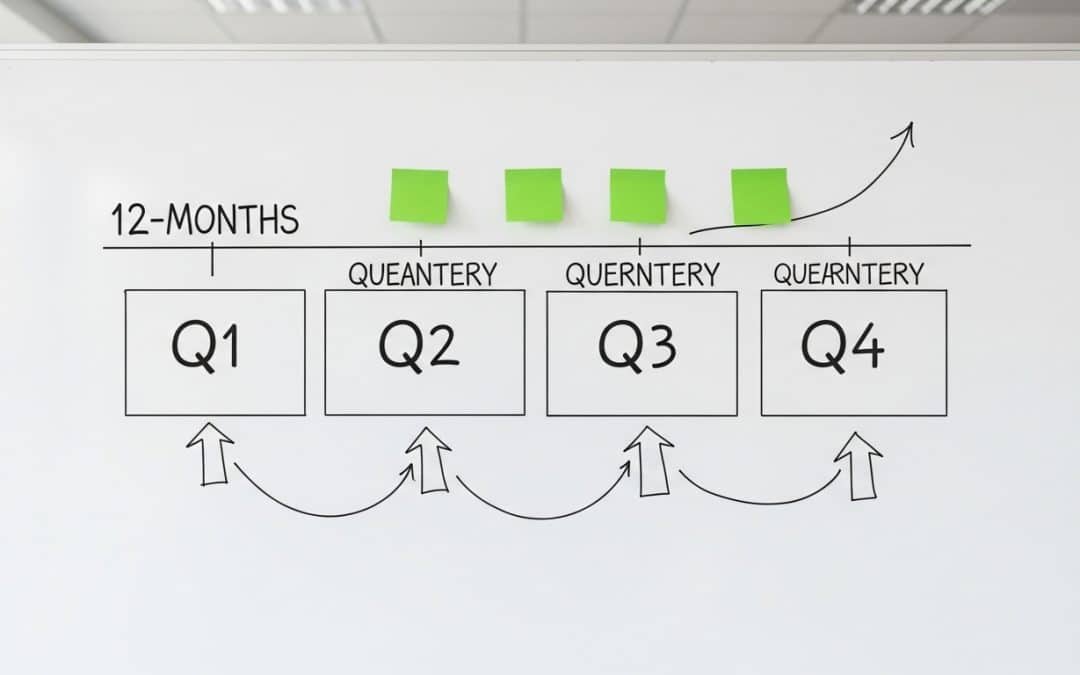
An ecommerce marketing strategy in South Africa that actually scales is a sequenced, 12-month plan — not a collection of channels turned on simultaneously and hoped to work. Most South African online stores that struggle with revenue growth are not missing tactics.
They are missing the sequencing that determines which channel to activate first, what infrastructure must be in place before each channel goes live, and how each channel compounds the performance of every other channel already running. This guide sets out a proven ecommerce marketing strategy structured as a 12-month scaling plan for South African online stores.
The plan follows the 3-Layer Revenue Stack™ — Traffic, Conversion, and Retention — with each quarter adding a layer of capability that makes the previous layer more efficient and the next layer more powerful.
Quick Answer
A proven ecommerce marketing strategy for South African online stores follows a four-quarter structure: Q1 builds the traffic foundation (Meta Ads + SEO groundwork), Q2 adds conversion optimisation and email automation infrastructure, Q3 launches Google Shopping and retention campaigns, and Q4 optimises and scales based on 9 months of performance data. South African online stores following this sequencing consistently reach 2–3x their starting monthly revenue by month 12.
Running a South African online store without a documented 12-month marketing plan — activating channels ad hoc and wondering why growth has stalled?
Get Your Free Ecommerce Marketing PlanEcommerce Marketing Strategy South Africa: Why Channel Order Matters More Than Channel Choice
The most common reason South African ecommerce marketing strategies fail is not that the wrong channels were chosen — it is that they were activated in the wrong order. A South African online store that launches Google Shopping before its product feed is structured correctly wastes ad spend on poorly matched queries.
One that launches Meta Ads before its landing pages convert above 2% generates traffic it cannot convert. One that invests in SEO before its product photography is professional creates pages that do not convert that traffic.
The 12-month sequencing plan solves this by treating ecommerce marketing as an infrastructure build. Each quarter installs a component that the next quarter depends on — and each component makes the previous components more profitable.
The 3-Layer Revenue Stack™ — How the Quarters Connect
Layer 1 is Traffic — getting the right South African consumers to your store through paid and organic channels. Layer 2 is Conversion — ensuring that traffic converts above 2% through landing page optimisation and checkout improvements. Layer 3 is Retention — generating repeat purchases and increasing customer lifetime value through email automation. Every layer compounds the previous one: better conversion makes every rand of SEO investment more productive.
Ecommerce Marketing Strategy South Africa: Q1 — Traffic Foundation (Months 1–3)
Quarter one establishes the traffic infrastructure — the channels, the tracking, and the conversion baseline — before significant ad spend is committed. Most South African online stores skip this phase and launch paid advertising immediately, which generates traffic without the data needed to optimise it or the conversion infrastructure to make it profitable.
Month 1 — Tracking, Baseline, and Meta Ads Foundation
Month one installs the measurement infrastructure: Google Analytics 4 with ecommerce tracking, Meta Pixel with purchase and add-to-cart event tracking, and Google Tag Manager configured for all conversion events. Without this tracking in place, every subsequent month's marketing spend generates data that cannot be acted on.
With tracking live, month one launches Meta Ads at minimum viable spend — R5,000–R8,000 — targeting retargeting audiences only: website visitors from the past 30 days, add-to-cart abandoners, and customer lookalike audiences built from the existing purchaser list. Retargeting campaigns consistently generate 4:1–8:1 ROAS and provide immediate purchase data for algorithm training.
Month 2 — SEO Foundation and Conversion Rate Assessment
Month two begins the SEO foundation work that will generate compounding organic traffic from month 9 onwards. This includes technical SEO audit and fixes, product page title and meta description optimisation for South African buyer search queries, and the first four blog posts targeting high-commercial-intent keywords. SEO work begun in month two will not generate meaningful traffic until months 9–12 — but every month of delay compounds the timeline further.
Month two also produces a conversion rate assessment: current store conversion rate measured against the South African ecommerce benchmark of 1.5–2.5%. If the store is converting below 1.5%, conversion optimisation is prioritised before significant paid advertising spend increases in Q2.
Month 3 — Scale Meta Ads and Fix Conversion Gaps
Month three scales Meta Ads spend to R8,000–R15,000 (depending on store revenue) and launches the first cold audience prospecting campaigns — targeting South African consumers by interest, demographic, and behaviour relevant to the product category. Cold audience prospecting at month three benefits from two months of pixel data, producing significantly better audience quality than a day-one cold launch.
Want the exact Q1 setup checklist — tracking configuration, Meta Ads retargeting structure, and conversion rate benchmarks — built specifically for your South African online store?
Get Your Free Q1 Ecommerce Setup GuideEcommerce Marketing Strategy South Africa: Q2 — Email Automation and Conversion (Months 4–6)
Quarter two adds the two highest-ROI components of any South African ecommerce marketing strategy: email automation and conversion rate optimisation. According to Shopify's ecommerce marketing guide, 14% of marketers say email has the strongest ROI of any ecommerce marketing strategy — and for South African online stores, email automation is the single highest-return investment available once the subscriber list reaches 2,000 active contacts.
Month 4 — Email Automation Infrastructure
Month four builds the core email automation flows in Klaviyo or Omnisend: abandoned cart sequence (3 emails over 7 days), welcome series (4 emails over 14 days introducing the brand and driving first purchase), and post-purchase sequence (3 emails driving review submission and repeat purchase). These three flows, correctly configured, typically generate 15–20% of total store revenue automatically — without additional ad spend.
Month 5 — Conversion Rate Optimisation
Month five runs the first structured CRO programme: A/B testing product page headlines, call-to-action button copy, product photography layout, and checkout flow. South African online stores that improve their conversion rate from 1.5% to 2.5% generate 67% more revenue from the same traffic volume at zero additional ad spend. CRO at month five benefits from four months of traffic data — enough to run statistically valid A/B tests on all major product pages.
Month 6 — Email Campaign Programme and ROAS Review
Month six launches a monthly email campaign programme alongside the automated flows: one broadcast campaign per week to the full subscriber list, segmented by purchase history and engagement level. Month six also produces the first full ROAS review across all active channels — identifying which Meta audiences, creative formats, and product categories are generating the best returns, and rebalancing budget accordingly before Q3 channel additions.
Ecommerce Marketing Strategy South Africa: Q3 — Google Shopping and Retention (Months 7–9)
Quarter three adds the two channels that produce the most durable long-term revenue for South African online stores: Google Shopping and retention marketing. These channels are more complex to set up than Meta Ads — but they generate higher-quality traffic and higher customer lifetime value respectively.
Month 7 — Google Shopping Launch
Month seven launches Google Shopping with a correctly structured Google Merchant Center feed and a Performance Max campaign. The South African Google Shopping auction is significantly less competitive than UK or US markets for most product categories — meaning South African online stores can achieve 5:1–12:1 ROAS on Google Shopping at ad spend levels of R6,000–R15,000/month that would not be viable in international markets.
Month seven Google Shopping benefits from six months of purchase data in Google Analytics — allowing Performance Max campaigns to optimise toward the store's highest-value customers from day one rather than spending weeks in the learning phase targeting broad audiences.
Month 8 — Retention and Loyalty Programme
Month eight introduces the retention layer: a structured programme to increase repeat purchase rate and average order value. For South African online stores, this typically involves a points-based loyalty programme, VIP customer email segment with exclusive offers, and a win-back campaign targeting customers who have not purchased in 90+ days. Retention marketing is the most cost-efficient revenue source available — re-engaging an existing customer costs 5–7x less than acquiring a new one.
Month 9 — SEO Organic Traffic Begins
By month nine, the SEO content published in months 2–6 begins generating meaningful organic traffic. South African ecommerce stores with consistent SEO programmes typically see their first significant organic revenue appearing between months 8–10. Month nine is when the compounding nature of the strategy becomes visible — organic traffic from SEO reduces the paid media required to hit revenue targets, improving blended ROAS across the entire channel stack.
Ecommerce Marketing Strategy South Africa: Q4 — Scale and Systemise (Months 10–12)
Quarter four scales what is working and locks in the system for year two. By month ten, a South African online store following this plan has nine months of performance data, a functioning email automation programme, two paid channels optimised against real purchase data, and content beginning to rank and generate organic revenue.
Month 10 — Scale the Highest-Performing Channel
Month ten increases budget on the channel generating the best blended ROAS over months 7–9. For most South African ecommerce stores, this is Google Shopping — which scales well with budget increases once the Performance Max algorithm has been trained on sufficient purchase data. Meta Ads budget is maintained or slightly reduced as Google Shopping takes a larger share of the paid media budget.
Month 11 — Influencer and UGC Layer
Month eleven tests a small influencer marketing programme: 3–5 South African micro-influencers in the relevant product category, each producing one piece of user-generated content (UGC) for use in Meta Ads creative. South African micro-influencer campaigns at R2,000–R5,000 per creator consistently produce UGC that outperforms studio photography in Meta Ads ROAS — because the content looks native to social feeds rather than like advertising.
Month 12 — Build the Year Two Plan
Month twelve produces the year two marketing plan — built on 12 months of real South African store performance data. The year two plan typically involves deepening the SEO content programme, adding a second email automation cluster (browse abandonment, cross-sell sequences), and testing one new paid channel (TikTok Ads or YouTube Ads for stores with strong video creative).
Ecommerce Marketing Strategy South Africa: Real Store 12-Month Results
A Cape Town-based skincare and beauty brand implemented this 12-month strategy from a standing start — no paid advertising, no email programme, a store converting at 0.9%. They had 800 monthly visitors and R28,000/month in revenue driven entirely by organic Instagram and word of mouth. Monthly marketing investment across all 12 months was R14,000–R18,000.
| Metric | Month 1 (Baseline) | Month 6 | Month 12 |
|---|---|---|---|
| Monthly website visitors | 800 | 3,400 | 9,200 |
| Store conversion rate | 0.9% | 2.1% | 2.8% |
| Monthly orders | 7 | 71 | 258 |
| Monthly revenue | R28,000 | R142,000 | R516,000 |
| Email revenue contribution | R0 | R24,000 (17%) | R98,000 (19%) |
| Organic traffic revenue | R28,000 (100%) | R42,000 (30%) | R103,000 (20%) |
| Monthly marketing spend | R0 | R15,500 | R17,800 |
| Blended ROAS | — | 9.2:1 | 29:1 |
Monthly revenue grew from R28,000 to R516,000 — an +1,743% increase — over 12 months from a standing marketing investment of R14,000–R18,000/month. The blended ROAS at month 12 was 29:1 — reflecting the compounding impact of organic SEO traffic (which carries no marginal cost), email revenue (which carries only platform cost), and paid channel ROAS improvement as algorithms matured.
The Compounding Effect Is the Strategy — Not a Side Benefit
South African ecommerce stores that activate channels in the correct sequence and maintain consistent execution experience compounding returns that bear no resemblance to the returns from any individual channel run in isolation. SEO traffic reduces paid media cost per sale. Email automation converts traffic that paid advertising generated. Google Shopping benefits from conversion rate improvements driven by CRO. Every layer makes every other layer more profitable — this is the 3-Layer Revenue Stack™ in operation.
How Growth Pulse Media Builds Ecommerce Marketing Strategies for South African Online Stores
Growth Pulse Media builds and executes complete ecommerce marketing strategies for South African online stores — covering all four quarters of the 12-month plan in a single integrated engagement. We built and scaled a large South African ecommerce business ourselves, which means we understand channel economics from an operator's perspective — not from a global benchmark report that has no relevance to local CPC rates, consumer behaviour, or payment gateway dynamics.
All execution is in-house — no outsourcing of Meta Ads management, Google Shopping optimisation, Klaviyo configuration, or SEO content production. We work with a limited number of South African ecommerce clients so every store receives senior-level attention at every stage. We report monthly on ROAS by channel, email revenue contribution, organic traffic growth, and blended cost per sale — all in Rand, against your specific revenue targets.
Who This Is NOT For
The 12-month ecommerce marketing strategy is not appropriate for every South African online store right now.
Your store has fewer than 30 orders per month. The 12-month strategy is built on channel algorithms that require purchase data to optimise — Meta Ads, Google Shopping, and email automation all perform significantly better with 50+ monthly purchases. A South African online store with fewer than 30 monthly orders should focus first on product-market fit and the first 50 customers through direct outreach and organic social before activating a multi-channel marketing strategy.
You want to run the strategy for 90 days and evaluate. The 12-month strategy produces most of its visible results in Q3 and Q4 — when organic SEO traffic begins arriving, email automation has built a meaningful subscriber base, and paid channel algorithms have been trained on 6+ months of purchase data. A South African online store that evaluates at 90 days sees only the Q1 foundation work. The correct evaluation window is 6 months.
Your product has no repeatable purchase cycle. The 3-Layer Revenue Stack™ generates its highest returns through retention — repeat purchases, cross-sells, and loyalty mechanics. South African online stores selling one-time high-ticket items (custom furniture, wedding products) cannot leverage the retention layer effectively. For these stores, a strategy prioritising paid acquisition over email retention is more appropriate. The 12-month strategy is optimised for stores with average order values of R200–R2,000 and purchase cycles of 30–180 days.
You are not prepared to invest consistently for 12 months. The compounding returns of the 12-month strategy require consistent month-by-month execution — pausing paid channels during slow months or cutting SEO investment after three months kills the compounding before it has time to build. South African online stores that need flexibility to pause and restart are better served by a campaign-based approach. The 12-month strategy requires consistent execution regardless of short-term revenue fluctuations.
Ready to build a documented 12-month ecommerce marketing strategy for your South African online store — with quarterly milestones, channel assignments, and monthly revenue targets set before anything is activated?
Get Your Free 12-Month Ecommerce Strategy BriefEcommerce Marketing Strategy South Africa: Frequently Asked Questions
What is an ecommerce marketing strategy in South Africa?
An ecommerce marketing strategy in South Africa is a documented, sequenced plan defining which marketing channels to activate, in what order, at what monthly investment, and with what measurable targets at each stage. The most effective structure for South African online stores is the 12-month plan organised around the 3-Layer Revenue Stack™ — Traffic, Conversion, and Retention. The sequencing between layers is as important as the channels themselves.
How long does an ecommerce marketing strategy take to produce results in South Africa?
A South African ecommerce marketing strategy produces initial paid channel results within 30–60 days of the first Meta Ads launch. Meaningful monthly revenue milestones — typically 2–3x the starting revenue — appear by months 6–9 as email automation, conversion rate improvements, and Google Shopping compound together. Full strategy maturity, where all channels are optimised and SEO is contributing meaningfully, typically occurs at months 10–12.
What channels should a South African ecommerce marketing strategy include?
A complete South African ecommerce marketing strategy should include Meta Ads as the first traffic channel, email automation in Klaviyo or Omnisend as the first retention channel, Google Shopping as the second traffic channel, and SEO as the long-term organic layer. The correct sequencing is Meta Ads first (months 1–3), email automation second (months 4–5), Google Shopping third (month 7), and SEO from month 9. Running all channels simultaneously produces worse results.
How much does an ecommerce marketing strategy cost in South Africa?
A 12-month ecommerce marketing strategy for a South African online store typically costs R12,000–R25,000 per month in total marketing investment. Stores generating R80,000–R200,000 per month in revenue should budget R12,000–R18,000 per month. Stores generating R200,000–R500,000 per month should budget R20,000–R35,000 per month. The strategy typically produces positive blended ROAS by month 4–5 for most South African product categories.
What is the 3-Layer Revenue Stack™ for South African ecommerce?
The 3-Layer Revenue Stack™ is Growth Pulse Media's ecommerce marketing framework for South African online stores. Layer 1 is Traffic — paid and organic channels that bring consumers to the store. Layer 2 is Conversion — CRO, product photography, trust signals, and checkout optimisation that convert traffic above the 2% benchmark. Layer 3 is Retention — email automation, loyalty mechanics, and re-engagement campaigns that increase customer lifetime value. Each layer compounds the others.
How do I measure the success of an ecommerce marketing strategy in South Africa?
Measure the success of a South African ecommerce marketing strategy using five metrics: blended ROAS, ROAS by channel, store conversion rate (targeting 2–3% for South African ecommerce), email revenue contribution (targeting 15–25% of total monthly revenue), and monthly revenue growth rate (targeting 10–20% month-on-month during the first 12 months). Organic traffic volume is the leading indicator of the SEO layer's compounding effectiveness.
The South African online stores that scale successfully are not the ones that discover a new channel — they are the ones that execute a proven sequence consistently for long enough that the compounding takes hold. That is the 12-month ecommerce marketing strategy in practice.
Ready to Build a Documented 12-Month Ecommerce Marketing Strategy for Your South African Online Store — With Quarterly Milestones, Channel Assignments, and Monthly Revenue Targets Before Anything Is Activated?
Growth Pulse Media builds and executes complete ecommerce marketing strategies for South African online stores — Meta Ads, Google Shopping, Klaviyo email automation, SEO content, and CRO, structured around the 3-Layer Revenue Stack™. We will deliver a one-page 12-month strategy brief specific to your store, product category, and revenue target within 24 hours of your enquiry. No obligation — we will get back to you within 24 hours.
Get Your Free 12-Month Ecommerce Strategy Brief