
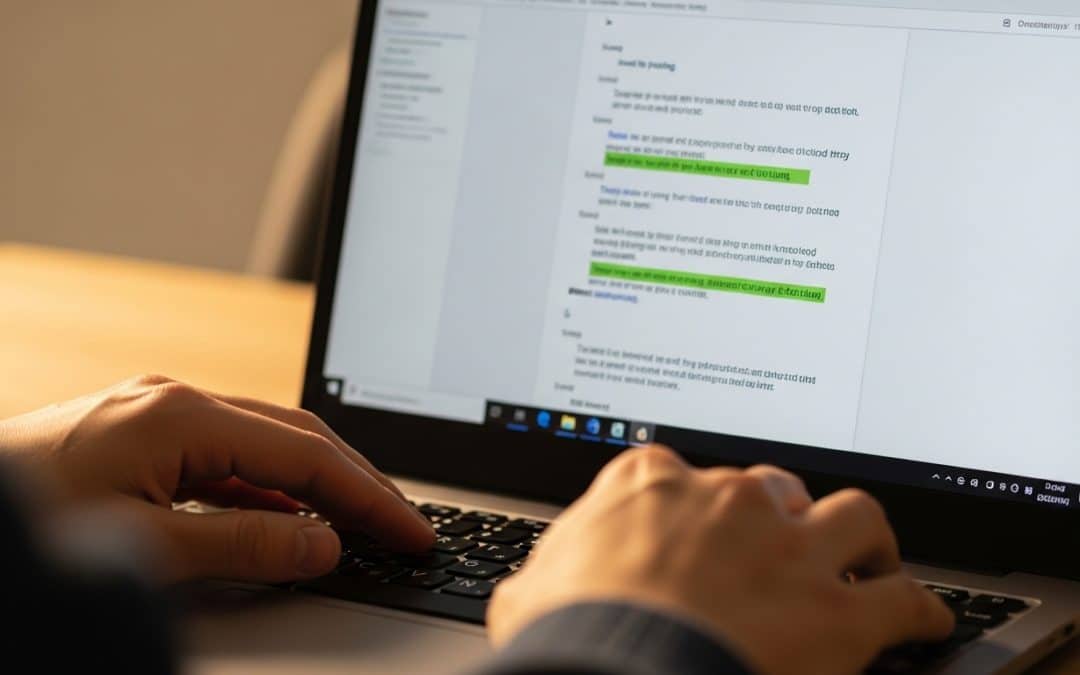
SEO copywriting in South Africa is the practice of writing content structured for both Google rankings and human conversion — two goals most South African business owners treat as separate when they are the same. This guide covers what SEO copywriting requires in 2026 and how South African businesses can apply the structural rules that separate ranked content from ignored content.
SEO copywriting is the content layer that makes every other part of digital marketing work harder — a well-written, properly structured page converts the traffic that SEO, Google Ads, and social media deliver into actual leads and revenue.
Quick Answer
SEO copywriting in South Africa means writing content that matches what South African searchers type into Google and gives the reader a clear reason to act. The three non-negotiable elements are keyword-aligned headings, answer-first paragraphs, and a single clear CTA matching the searcher's intent. South African pages with this structure consistently outrank pages with better writing but weaker format.
Is your South African website getting Google traffic but converting less than 2% of visitors into enquiries? The problem is almost always copywriting structure, not traffic volume.
Get a Free Copywriting AuditSEO Copywriting South Africa: What Google Actually Rewards in 2026
Google's approach to ranking content has shifted significantly since 2022. According to Google's own guidance on creating helpful content, the question Google asks of every page is whether it provides a satisfying experience for the person who found it — not whether it contains a certain keyword density or a minimum word count.
For South African businesses, this means SEO copywriting in 2026 is fundamentally about answering the searcher's question completely and making the next step obvious. Pages that do this rank. Pages that pad content to hit a word count, repeat keywords without adding information, or bury the answer after three paragraphs of context do not rank — and even when they do, they do not convert.
The Four Elements Google Uses to Evaluate Content Quality
Google evaluates content quality along four dimensions. Relevance: whether the page content matches the specific intent of the search query. Depth: whether the page covers the topic completely enough that the reader does not return to Google. Authority: whether the content demonstrates genuine expertise and trustworthiness — what Google calls E-E-A-T. Usability: whether the page loads fast, is readable on mobile, and makes the next action clear. South African copywriters need to satisfy all four.
Answer-First Is the Most Important Structural Rule in SEO Copywriting
The most common copywriting mistake on South African websites is burying the answer. A page titled "How Much Does SEO Cost in South Africa?" that spends three paragraphs explaining SEO before mentioning a price will be outranked by a page that leads with "SEO costs R3,000–R15,000 per month." Google measures whether users get a satisfying answer quickly — if they bounce immediately, that sends a strong negative signal. Answer first, always.
SEO Copywriting South Africa: The Seven Structural Rules
These seven rules apply to every piece of content written for a South African business website — service pages, blog posts, landing pages, and product descriptions.
Rule 1: The H1 Must Contain the Exact Search Phrase
The H1 heading is the most important on-page SEO signal after the page title tag. The H1 for a South African business page must contain the exact phrase prospects type into Google — not a creative variation. A page targeting "digital marketing agency Johannesburg" must have an H1 containing "digital marketing agency Johannesburg" — not "Your Growth Partner in the City of Gold." Creative headlines belong below the H1, not in place of it.
Rule 2: The First Sentence Must Contain the Focus Keyword in Bold
The first sentence of every page and blog post must contain the exact focus keyword, bolded, along with a direct answer or pain hook. This tells Google what the page is about and tells the South African reader immediately that they have found what they were looking for. Both outcomes increase time on page — a ranking signal. The first sentence is not the place for a question, a quote, or a scene-setting introduction.
Rule 3: Every H2 Must Open With a Direct Answer Sentence
The first sentence under every H2 must answer the implied question of that section directly and completely. Google frequently extracts these sentences as featured snippets — the answer boxes that appear above organic results. For South African businesses, a featured snippet on a competitive keyword can double click-through rate. Write every H2 opening sentence as if it will be read in complete isolation, without surrounding context.
Rule 4: Use Rand Figures and Local Context
South African searchers want to know what something costs in rands, how it works locally, and which platforms and providers are involved. SEO copywriting for South African businesses must include local data points: pricing in ZAR, references to local payment platforms (PayFast, Ozow), and South African market context where relevant. Generic content without local specifics ranks below locally-written content for South African queries every time.
Rule 5: Paragraph Length Must Stay Under 75 Words
Long paragraphs suppress rankings and conversions. Rank Math flags paragraphs over 75 words as a Content Readability error. South African mobile users — over 70% of website traffic — skip long paragraph blocks entirely. Write every paragraph to make a single point in under 75 words. If a paragraph runs long, find the natural break where the second paragraph stands alone. Never split mid-sentence.
Rule 6: Include One Clear CTA Per Logical Section
Every piece of SEO copy must have a clear CTA that matches the searcher's intent. A page targeting "SEO agency Johannesburg" needs a direct commercial CTA: "Get a Free SEO Quote." A page targeting "what is SEO" needs a softer CTA: "Download Our Free SEO Guide for SA Businesses." Mismatching CTA intent to search intent is one of the most common conversion killers on South African websites.
Rule 7: Write for Skimmers First, Readers Second
Website visitors scan before they read. The H1, first sentence of every paragraph, subheadings, takeaway boxes, and CTA button text must all communicate the core value proposition — so a South African visitor who scans rather than reads still understands what the page offers and why they should act. The full body copy serves readers who are already engaged. Structure for skimmers first.
Want a page-by-page review of your South African website's copywriting structure — identifying exactly which pages are losing leads due to weak headings, buried answers, or mismatched CTAs?
Book Your Free Copy Structure ReviewSEO Copywriting South Africa: Before and After Real Business Results
A Johannesburg accounting firm had three service pages ranking on Google page 2, generating 340 monthly organic sessions but only 3 enquiries per month — a 0.9% conversion rate. A copywriting audit found each page buried the service description after 200 words of context, used H2 headings with no search keywords, included no pricing, and ended with a generic contact link. All three pages were rewritten to SEO copywriting structural standards.
| Metric | Before Rewrite | 90 Days After Rewrite |
|---|---|---|
| Average ranking position (3 pages) | Position 14.3 | Position 6.1 |
| Monthly organic sessions | 340 | 890 |
| Monthly enquiries from organic | 3 | 19 |
| Conversion rate (sessions to enquiry) | 0.9% | 2.1% |
| Estimated monthly pipeline | R75,000 | R475,000 |
| Content changed | — | Structure only — same topics, better format |
The topics did not change. The services offered did not change. The budget did not change. Only the copywriting structure changed — and rankings moved from page 2 to page 1 while conversion rate more than doubled. The combined effect was a 533% increase in pipeline value from the same three pages.
Structure Outperforms Volume in SEO Copywriting
A common South African SEO myth is that more content equals better rankings. Ten poorly structured pages will consistently underperform three well-structured pages targeting the same queries. The Johannesburg accounting firm example demonstrates this: three existing pages, rewritten without adding any new topics or significantly increasing word count, jumped from page 2 to page 1 and tripled enquiry volume. Fix the structure of existing content before creating new content — the ROI is substantially higher.
How Growth Pulse Media Handles SEO Copywriting for South African Businesses
Growth Pulse Media writes and optimises SEO copy for South African businesses — service pages, blog content, landing pages, and product descriptions — applying the seven structural rules to every piece of content produced. Every page we write starts with a keyword brief that defines the exact South African search phrases the page must rank for, the intent behind those phrases, and the CTA that matches that intent.
Our SEO copywriting is grounded in direct experience with Rank Math Pro, Google Search Console, and Google Analytics 4 on South African WordPress and Shopify sites. We write with local context built in — Rand pricing, South African platform references, local regulatory and market context — because generic content does not rank for South African queries. All copywriting is executed in-house, never outsourced.
Who This Is NOT For
SEO copywriting is not the right starting point for every South African business right now.
Your website has fewer than 200 monthly visitors. SEO copywriting optimises the conversion of existing traffic. A website with 150 monthly sessions does not have enough traffic to measure conversion improvements or generate enough ranking signals for rewritten pages to show results within 90 days. Build traffic to at least 300 monthly sessions before investing in copywriting optimisation.
You want keyword-stuffed content that repeats a phrase every 100 words. Keyword stuffing has been a negative ranking signal since 2012. South African businesses that brief copywriters to "use the keyword X times per page" will receive content that damages rankings and reads like it was written by a machine. SEO copywriting in 2026 means writing for humans first and structuring for Google second — keywords appear naturally, not on a mechanical schedule.
You want results in two weeks. SEO copywriting improvements take 4–12 weeks to show measurable ranking movement as Google re-crawls and re-evaluates the rewritten pages. Businesses that need enquiries within two weeks should use Google Ads, not SEO copywriting. SEO copywriting is a compounding asset — the improvement made today generates returns for 12–36 months. It is not a short-term lead generation fix and should not be evaluated on a two-week timeline.
You want to outsource copywriting to the cheapest available option. South African SEO copywriting requires understanding the local market — Rand pricing, local platform references, and regional search intent. Generic offshore content that passes Copyscape but contains no South African context will consistently rank below locally-specific content. The price difference between generic and market-specific copy is small. The ranking difference is significant.
Ready to find out which pages on your South African website are losing rankings and leads due to copywriting structure — and want a prioritised fix list before committing to a rewrite?
Get Your Free SEO Copywriting AuditSEO Copywriting South Africa: Frequently Asked Questions
What is SEO copywriting in South Africa?
SEO copywriting in South Africa is the practice of writing website and blog content that both ranks on Google for South African search queries and converts visitors into enquiries. It combines keyword research, structural writing rules (answer-first paragraphs, keyword-containing H2s, scannable layout), and local market context (Rand pricing, South African platform references) to produce content that outperforms generic alternatives in both rankings and conversion rate.
How is SEO copywriting different from regular copywriting?
Regular copywriting focuses on persuasion for a reader who has already arrived. SEO copywriting does this plus structures content so Google can find, understand, and rank the page for the specific query typed. This requires keyword-aligned headings, answer-first paragraphs, and sufficient content depth that the reader does not return to Google. Both goals — ranking and conversion — are served by the same structural approach.
How long should SEO copy be for a South African business page?
South African service pages should be 600–1,200 words covering the service, pricing range, process, and a clear CTA. Blog posts should be 1,500–2,500 words for focused topics and 2,500–4,000 for comprehensive guides. Correct length is determined by what answers the target query completely — not by a word count target. A 600-word service page that answers every buyer question will outrank a 2,000-word page that pads around the same information.
Should SEO copy for South African businesses include pricing?
Yes — including pricing is one of the highest-impact decisions a South African business can make on a service page. Pricing transparency reduces unqualified enquiries, improves trust, and helps pages rank for high-intent queries like "SEO pricing South Africa" and "web design cost Johannesburg." South African businesses that hide pricing behind "contact us for a quote" generate lower quality enquiries and rank below competitors who display at least a starting price.
What is the biggest SEO copywriting mistake South African businesses make?
The biggest SEO copywriting mistake is writing for the company's perspective instead of the customer's search query. An accounting firm that names a page "Comprehensive Financial Advisory Solutions" instead of "Accounting Services Johannesburg" is optimising for internal brand language. Nobody searches "comprehensive financial advisory solutions" — they search "accountant Johannesburg." The H1 must match the actual search query, not the internal company description.
How often should South African businesses update their SEO copy?
South African service pages should be reviewed every 6–12 months to update pricing, add new case studies, and verify that target keywords still reflect current search behaviour. Blog posts ranking on page 1 should be reviewed annually — Google's freshness signal rewards pages updated with new information. Pages that have dropped from page 1 should be audited for structural gaps before any new content is created for the same topic.
Ready to Rewrite Your South African Website Pages With SEO Copywriting That Ranks and Converts?
Growth Pulse Media audits and rewrites SEO copy for South African business websites — service pages, blog posts, and landing pages — applying the seven structural rules that move pages from page 2 to page 1 and double conversion rates. We will send you a page-by-page copywriting audit report identifying every structural gap before any rewrite begins. No obligation — we will get back to you within 24 hours.
Get Your Free SEO Copywriting Audit Report